
Foam Fire Extinguishing Systems: Risk Control in Fuel and Chemical Storage
Where Do Foam Fire Extinguishing Systems Make a Difference?
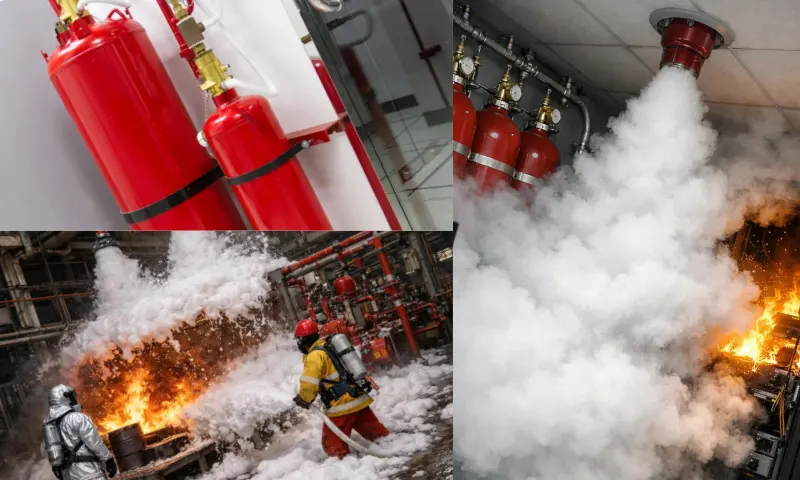
Fighting a fire in a facility containing flammable liquids requires a completely different strategy than a standard office fire. As Ukaz fire and security systems, we frequently observe in our inspections of industrial facilities that water, instead of extinguishing petroleum-derived fires, spreads the flames over a wider area. The infrastructure of foam fire extinguishing systems, the most effective solution for ensuring safety in such high-risk areas, completely covers the liquid surface, cutting off its contact with oxygen. Foam fire extinguishing systems not only smother flames but also cool the fuel surface, stopping evaporation and preventing re-ignition.
Choosing the Right Foam Concentration for Foam Fire Extinguishing Systems
Not every fire extinguishing agent is suitable for every risk. Especially in Class B fires, the advantages provided by foam are unmatched by any other system.
- Hangars and Warehouses: Can cover large areas in seconds against risks such as jet fuel that may leak in aircraft hangars.
- Logistics and Chemical Facilities: Controls fluidity in flammable solvents and paint storage, stopping the spread of fire.
- Recycling Centers: Penetrates deep into hard-to-extinguish materials like plastic and rubber, ending smoldering fires.
The foam concentration, the heart of the system, must be selected according to the chemical structure of the substance to be protected. While alcohol-resistant (AR-AFFF) foams are required for alcohol-based liquids, different formulations are used for standard hydrocarbon fires. Incorrect foam selection can cause the foam to break down and not adhere to the liquid during intervention. This technical detail, though appearing to be a minor error, is the most critical point that renders the entire system ineffective during a fire. When making a safety investment, focusing not only on the existence of the system but also on its chemical compatibility and the accuracy of its hydraulic calculations guarantees the future of your facility.





