The History of Bolts
What are the Yield and Tensile Strength of Bolts?
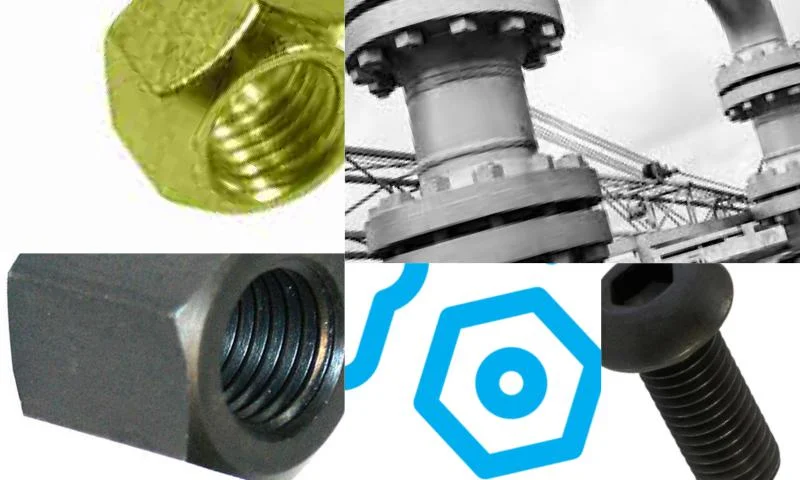
The word 'bolt' originates from the Italian word 'Giaveta'. To connect parts with a bolt, holes are first drilled. Then, the connection is made using a bolt and nut. Bolts were manufactured using hot forging in the 1850s. In the 20th century, mass production began using cold methods. Bolts are fasteners frequently used in the machine and construction industries. According to the DIN system, bolts are generally made from St37, St42, and St40 steels. Bolts made from St37 steel are one of the most commonly used types. This steel has a tensile strength of 3700 N/mm2. Bolts can sometimes also be produced from C45 unalloyed steels. If the materials are of high quality, the process is also quite easy. Among the types like flat head, countersunk head, and wood screws, the most preferred are the hex socket head and hexagonal head bolts. You can obtain various types of bolts from our site.
Bolt and Nut Compatibility
The distance a bolt and nut travel after one full turn is called the pitch. The pitch measurements are taken with a thread gauge. There are certain numbers on bolts. By performing a simple calculation using the numbers on the bolt, it is possible to find the yield and tensile strengths of the bolt. When a certain force is applied to materials, a deformation is observed. The value before the deformation occurs is called the yield strength. After the part exceeds its yield limit, it undergoes a permanent deformation in its tensile value. From this, it is possible to determine whether the part is ductile or brittle. The strength of bolts and nuts is important. Attention must be paid to certain matters when installing bolts. Compatibility and the same quality between the nut and bolt are among the important considerations. The surface where the bolt will be installed should be free of paint and galvanization. Additionally, it is important that it is dry, burr-free, and oil-free.